
Quick answer
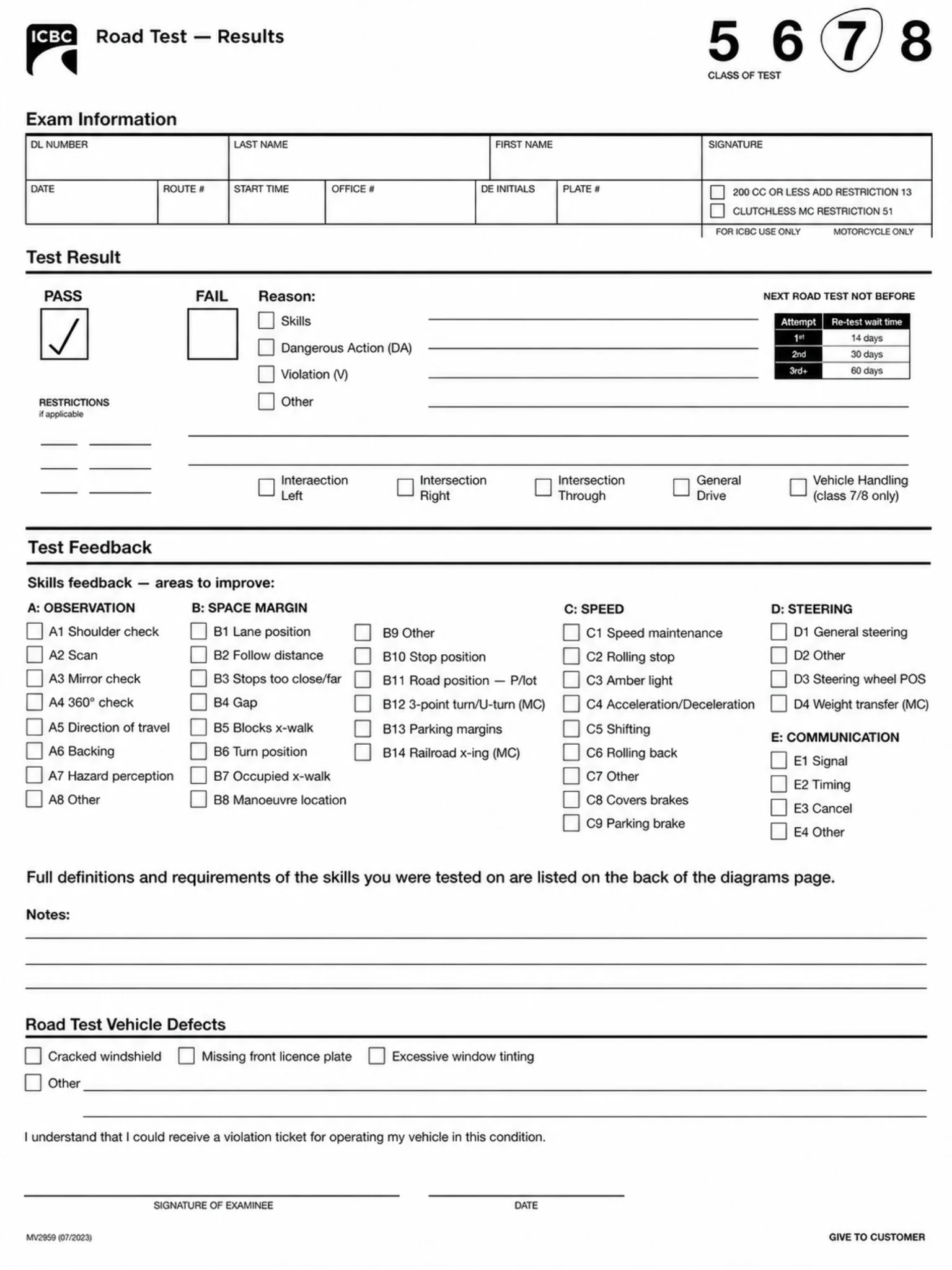
- Your ICBC result sheet is more than a pass or fail note — it is feedback on what to fix next.
- Most markings point to skill areas such as observation, space margin, speed, steering, or communication.
- A repeated pattern matters more than one isolated small mistake.
- Dangerous actions, traffic violations, and unsafe decisions are more serious than normal skill feedback.
- The best next step is to turn the sheet into a short, targeted practice plan before your next test.
If you just finished an ICBC road test, the result sheet can feel confusing. You may see letters, short notes, circled areas, or examiner comments, but not a full explanation of what to fix. This guide explains the sheet from a driving-instructor point of view, so you can understand the feedback without guessing.
This is not an official ICBC page and it does not replace ICBC instructions. It is a practical translation of common feedback areas into normal student language, with local Chilliwack practice advice from Right of Way Driving School.
What the ICBC result sheet is for
The road test result sheet helps document how your driving matched the expected skills during the test. It can show normal skill feedback, serious safety concerns, examiner comments, and the final result. The value of the sheet is not only the result. The value is knowing what to practice next.
It records patterns
If the same type of mistake appears more than once, that usually points to a habit that needs practice.
It separates skill areas
Observation, speed, position, steering, and signals are easier to fix when you train them separately first.
It gives a retest plan
The sheet can become your lesson plan if you know how to read it correctly.
The main feedback areas
ICBC's Skills Explainer organizes road test feedback around core driving competencies. The big idea is simple: the examiner is looking at safe, legal, controlled driving, not just whether you can complete one manoeuvre.
Observation
Scanning, mirror use, shoulder checks, 360 checks before reversing, looking in the direction of travel, and noticing hazards early.
Space margin
Lane position, following distance, stopping position, crosswalk space, safe gap choice, parking margins, and safe manoeuvre location.
Speed
Choosing a speed that is legal, consistent, and appropriate for conditions, plus smooth acceleration, braking, and complete stops.
Steering
Steering control, wheel position, and smooth handling. The issue is usually control and safety, not personal style.
Communication
Signals, signal timing, cancelling signals, and making your intentions clear to other road users.
Serious items
Dangerous action, violation, and other serious issues are different from normal skill notes and need immediate attention.
How to read your sheet in 10 minutes
Do not start by asking how many marks you got. Start by looking for the story. The sheet usually tells you where your driving became less safe, less predictable, or less controlled.
- Find the repeated category.
One observation note may happen from nerves. Several observation notes usually mean your checking routine is not reliable yet. - Separate small mistakes from serious mistakes.
A late signal and a dangerous action are not the same level of problem. Treat safety-critical feedback first. - Connect the note to a real driving moment.
Ask yourself where it happened: lane change, left turn, parking, school zone, hill, crosswalk, or traffic merge. - Practice the skill outside the full test first.
Fix one habit in isolation, then put it back into a full road-test-style drive.
Instructor tip
If a student brings us a result sheet, we do not just read the code. We recreate the situation. If the sheet points to shoulder checks, we test lane changes, curb pull-outs, turns, and parking exits until we find where the check disappears.
Common result sheet patterns
Most students do not fail because they cannot drive. They fail because one or two habits break down under test pressure.
Observation notes
Observation feedback often means the examiner could not see a complete checking routine at the right time. That may include missing a shoulder check before moving sideways, not scanning intersections early enough, relying too much on the backup camera, or forgetting a full 360 check before reversing.
Space margin notes
Space margin feedback usually means the car was too close, too wide, too far over, stopped in the wrong place, blocked a crosswalk, or chose a gap that made another road user react.
Speed notes
Speed feedback is not only about speeding. Driving too slowly without reason can also create problems. The goal is speed that is legal, smooth, consistent, and appropriate for traffic, visibility, weather, hills, school zones, and pedestrians.
If you failed, do not just rebook and hope
After a failed road test, the worst move is to immediately rebook without changing the driving pattern that caused the problem. ICBC recommends reviewing the feedback from your previous road test form and practicing before you retake the test. That is the point: feedback only helps if it changes the next practice session.
What to practice next based on your sheet
Mostly observation feedback
Practice mirror checks, shoulder checks, 360 checks, intersection scanning, and backup observation until the routine stays consistent under pressure.
Mostly space margin feedback
Practice lane position, stopping position, following distance, parking margins, and safe gap decisions in traffic.
Mostly speed feedback
Practice school zones, playground zones, hills, braking timing, and choosing speed for conditions rather than driving from memory.
Serious or unsafe item
Book a targeted session before another attempt. A serious safety issue needs controlled practice, not just more time behind the wheel.
FAQ
Does one mark mean I failed?
Not necessarily. A single feedback note is not the same as a full result. Look at the type of issue, whether it repeated, and whether anything unsafe or illegal happened.
Is the result sheet the same for Class 7 and Class 5?
The driving expectations overlap because both tests look for safe, legal, controlled driving. The context and difficulty can feel different, especially for Class 5 drivers.
Can I send my result sheet to Right of Way?
You can bring it to a lesson or Mock Road Test and we can use it to build a practice plan. If you share a photo, cover any personal information you do not want included.
Related Road Test Guides
Official ICBC Resources
Want to compare this guide with ICBC’s original materials? Start with these links.
 English PDF
Learn to Drive Smart
Open ICBC’s full driver handbook for road signs, rules, and safe driving fundamentals.
Skill definitions
ICBC Skills Explainer
Definitions of common marked skills and what they mean on your result sheet.
Road test prep
Prepare for your road test
Official appointment, checklist, and road test preparation information from ICBC.
English PDF
Learn to Drive Smart
Open ICBC’s full driver handbook for road signs, rules, and safe driving fundamentals.
Skill definitions
ICBC Skills Explainer
Definitions of common marked skills and what they mean on your result sheet.
Road test prep
Prepare for your road test
Official appointment, checklist, and road test preparation information from ICBC.
Turn your result sheet into a practice plan.
Bring your ICBC result sheet to a mock test or lesson. We will help you connect the marked feedback to real driving habits and fix the patterns before your next road test.